

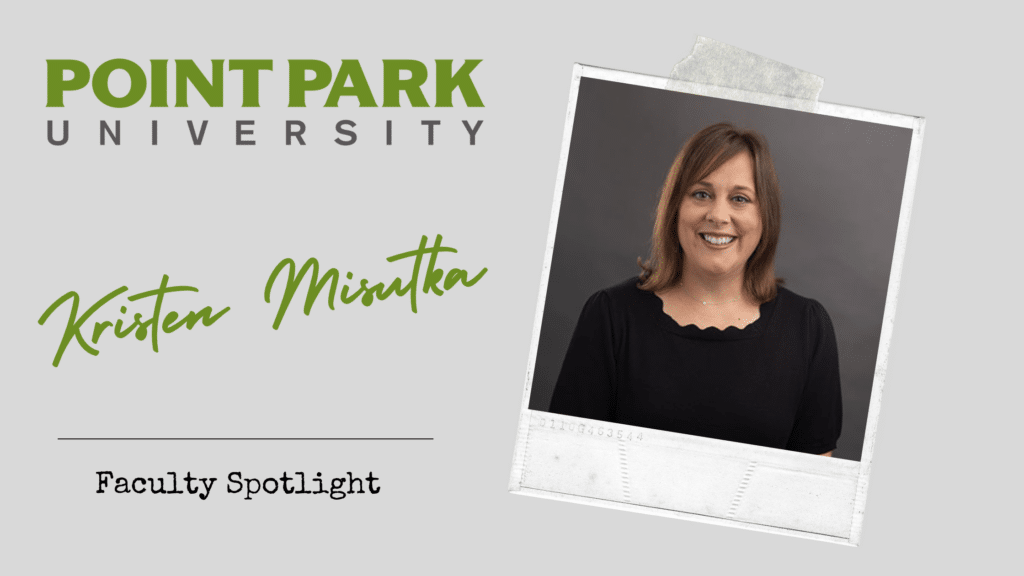

An Assistant Professor and Director of Master’s Programs in Teaching at Point Park University, Kristen Misutka brings a rich background in special education and literacy to future teachers and current teachers pursuing advanced degrees. Below, the 2025 Distinguished Teaching Award winner shares her background, educational philosophy, and what sets Point Park apart.
What programs do you teach at Point Park University? What drew you to this field of study? What keeps you excited about it?
I serve as an Assistant Professor in the School of Education and Director of the Master’s Programs in Teaching at Point Park University. I oversee several graduate programs, including the M.Ed. in Reading and Literacy, the Reading Specialist Certification, and Initial Teacher Certification programs. I also work closely with our Special Education programs and grant-funded teacher preparation initiatives.
I began my career in education with a desire to help students develop a genuine love of learning and engagement in the classroom. During high school, I had the opportunity to work in a Life Skills classroom, and that experience solidified my decision to become an educator. Watching students grow in confidence and independence showed me the impact that dedicated teachers can have on a child’s future.
Over time, my passion grew beyond my own classroom to preparing educators who will go on to impact hundreds of students throughout their careers. That is what continues to excite me most about this work. I know that the teachers we prepare will have a lasting and meaningful influence on countless learners.
What attracted you to teach at Point Park University? What sets it apart?
I was drawn to Point Park University because of its strong commitment to preparing future teachers while developing connections with students and the community. The University values collaboration and student-centered learning, which closely aligns with my own educational philosophy.
What sets Point Park apart is the level of personal attention students receive. Faculty are deeply invested in student success and intentionally build strong relationships with learners. As a program director, I regularly meet with students to discuss certification requirements, career goals, and personal challenges that may affect their progress.
Those one-on-one conversations remind me why I value the close-knit nature of our programs. We also recognize that many of our students are working professionals, and we strive to provide the flexibility and support they need to succeed while balancing multiple responsibilities.
How do Point Park University’s programs support working professionals balancing school, career, and life?
Many of our students are balancing full-time careers, families, and other responsibilities while pursuing their degrees. Our programs are intentionally designed with that reality in mind. Courses are offered in flexible formats, and faculty are mindful of the challenges working professionals face. I am continually impressed by our students’ dedication, and our faculty work hard to provide the flexibility and support they need to stay on track toward their goals.
We also focus on creating meaningful, applied learning experiences that connect directly to students’ professional contexts. Many assignments are designed so students can immediately apply what they are learning in their own classrooms or workplaces. This ensures that coursework is both relevant and impactful while maintaining strong academic rigor.
What is your professional background as an educator?
I began my career as a special education teacher, and that experience really shaped the educator I would become. Over the years, I pursued additional certifications as a reading specialist, library media specialist, special education supervisor, and principal, along with earning my doctorate.
Each one came from a desire to learn something new, take on a new challenge, or better understand another part of education. Looking back, those experiences have shaped my commitment to both teaching and learning. I have always believed that there is something new to learn, no matter how long you have been in education.
Tell us a little about yourself. Why did you become interested in education?
My interest in education began early. My mother was an elementary and reading teacher, and I grew up surrounded by a love of teaching and learning. She often brought home books, teaching materials, and stories from her classroom, and those experiences helped me appreciate the power of education from a young age.
In high school, I worked with students in a Life Skills classroom, and that experience solidified my desire to pursue this field. While my path has evolved over time, one constant has remained: my love for teaching. That passion continues to guide my work today.
Winning the 2025 Distinguished Teaching Award recognizes your dedication to students. What keeps you inspired to teach?
Receiving the Distinguished Teaching Award was a tremendous honor because it reflects the relationships built with students and the commitment to their success. With every new role I have taken over the course of my career, I am a teacher at heart.
What inspires me most is watching students achieve goals they once thought were out of reach. Whether it is receiving a message from a student who has passed the Praxis exam, earned a certification, or secured a new teaching position, those moments are incredibly rewarding and remind me why this work matters.
I also value the opportunity to continue learning alongside my students. Education is constantly evolving, and each semester brings new perspectives, ideas, and opportunities for growth.
What would you tell prospective students considering your programs? What should students and colleagues know about you?
Prospective students should know that we genuinely care about their success. While I maintain high expectations, we also prioritize support, encouragement, and guidance throughout their academic journey.
Students often tell me that they appreciate having someone they can reach out to when they need guidance, whether they have questions about coursework, certification requirements, or balancing school with work and family responsibilities. We strive to create a learning environment where students feel challenged, valued, and empowered.
What advice do you have for students pursuing a graduate degree in education? How can they stand out?
My advice is to approach graduate study with curiosity and a willingness to learn. The students who get the most out of their programs are the ones who are engaged, ask questions, and look for ways to apply what they are learning to their own practice. I also encourage students to be reflective practitioners.
Educators do not have to have all the answers to be effective. Some of the best educators I know are the ones who are willing to ask questions, seek feedback, and consider what they could do differently. Graduate school is an opportunity to learn from professors, colleagues, and personal experiences. Be open to those opportunities and do not be afraid to try something new.