
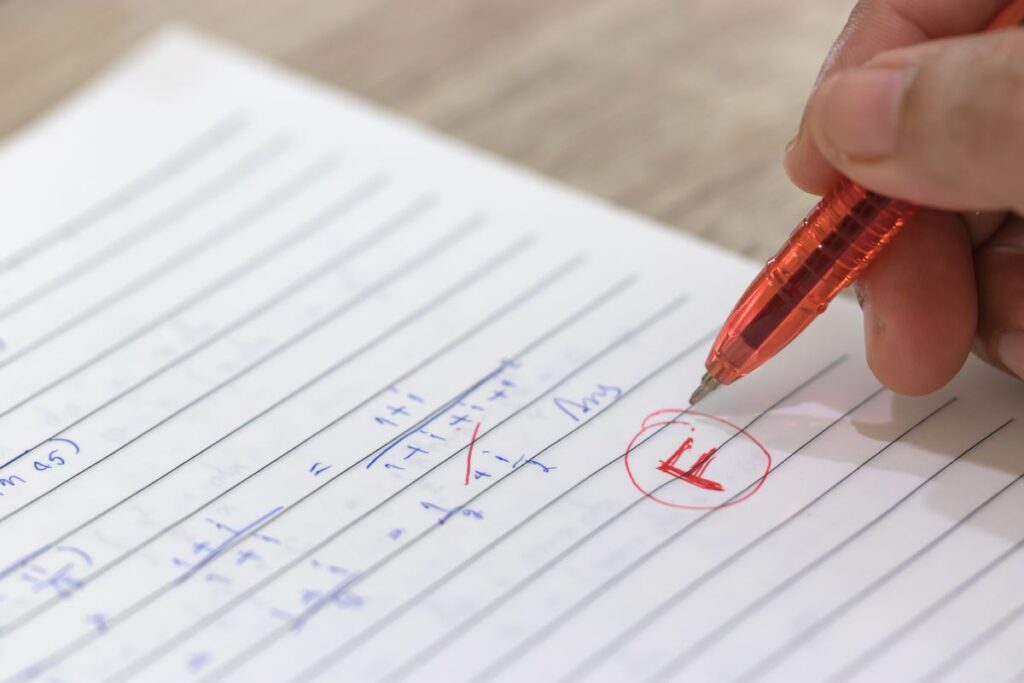
Understanding Retakes
As with many things in life, how you approach student retakes/retests as an educator has to do with your “why.” What is your philosophy, and what is your purpose with retakes? So, let me start by asking a few questions, and you can rhetorically see where you stand with retakes.
Every couple of years this comes up in our academic circles, and these are the questions we ask that revolve around these thoughts for retakes:
- Are we retaking this test to give students a chance at success?
- Are we retaking this test to allow students to show mastery?
- Are we retaking this test because we did not teach the content well the first time?
- How is this preparing the student for future endeavors?
You can fall anywhere on this spectrum, but your reason for giving/allowing retakes will dictate your philosophy. Before we get into more of why to have retakes, let me sidetrack for a minute about why some don’t allow retakes. This is the third high school I have worked at in my twenty-three years of education that if you were in an Advanced Placement class, you were not allowed to retake an exam.
The reason is that colleges will not allow retakes; thus, if we are going to prepare you for college and this is a college-level class (because it qualifies for college credit where accepted), then it is our duty to prepare you for a college situation. This is one of the few exemptions I have seen to allow retakes.
For our purposes today, this author will use the retest policy from my current district as a springboard for this discussion. Remember, your policy, if you get to create one, should come from your reason for it: What is the goal of the retake, and how will it help the student be successful?
The district I am in says this:
The District’s goal is for every student to master all the TEKS specified for each grade level and the STAAR End of Course (EOC) exams. Each student will be provided instruction that allows them to apply and practice the concepts and skills mandated in the TEKS and then be assessed for mastery. If a student does not demonstrate mastery of concepts and skills as specified in the TEKS and necessary for future learning, reteaching and retesting (or re-assessment) should be provided for the student.
If 50% or more students in a class period fail to demonstrate mastery of TEKS on a major grade, the teacher will provide an opportunity within five school days for reteaching and retesting during class time.

Looking for a graduate program?
If fewer than 50% of all students in a class period fail to demonstrate mastery of TEKS on a major grade, the teacher will provide an opportunity within five school days for reteaching and/or retesting during or outside of class time. Reteaching should employ instructional strategies different from the original instruction. The practice of adding points to each student’s grade should not be utilized as a strategy.
Those are the highlights from the policy, which goes on to discuss more about what reteach can look like and what exemptions are for retests/retakes. In some cases, the retake does not have to look like the first test. Examples could include oral examination, revisions of a paper or project, a report, a presentation, or a formal test. Whichever way the teacher decides to do the retake, it needs to focus on what the student did not do well the first time.
You see at the start of the policy our district states that our reason for retesting is to ensure students have learned the learning standards for our state (in Texas known as TEKS). Mastery is the key. Thus, if over 50% of the class does not learn a TEK or if over 50% of the class fails a test, the teacher must either reteach the TEK or essentially reteach the unit. Our responsibility is for the students to demonstrate they know what is being taught to them.
Implementing a Retake Policy
If you get to implement your own Retake Policy, it is up to you to consider who all gets to do these retakes. In my research, I found many middle schools that allow retakes regardless of the “level” of the class to help ensure all students are prepared for the next level.
Since some high schools have to also prepare students for education after high school, some places will not allow retakes at all because colleges will not (that trend is on the extreme end). What you want in your policy will reflect your philosophy on why students retake tests, exams, etc.
Preparing Students for the Retake
The support for students before they retake is up to the teacher, but it is important to help students learn the content that they did not master previously. This could come through extra practice; it could look like another direct teacher, it could look like a more hands-on assignment, or it could look like the student doing more research on a topic.
Either way, a teacher needs to be prepared to deliver the same content through a different instructional method to help make sure the student can demonstrate mastery on the next opportunity.
Evaluating the Effectiveness of Retakes
In the end, the effectiveness of a retake/retest is based on whether or not the student has mastered the content. For some students that means they had more time, or they heard the content again a different way and this time it clicked.
Some teachers have given the same test for a retest so that they directly compare the progress in the learning standards for the student and then use that as evidence of mastery or growth. In the end, that is how the effectiveness of a retake should be evaluated; did the student master the content.
Educators never stop learning; check out our available graduate degree programs to hone your skills and promote lifelong learning and academic excellence.