
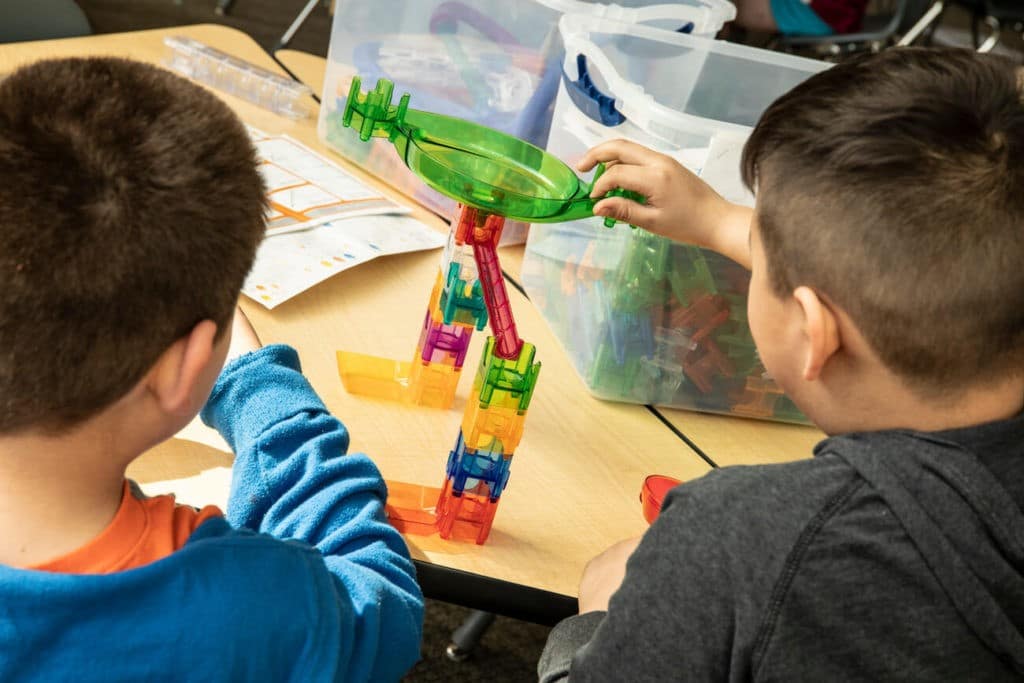
In today’s educational landscape, where information is abundant, the focus has shifted from mere knowledge acquisition to the application of information to generate novel ideas. This paradigm shift makes makerspaces an ideal fit, offering students unparalleled opportunities to construct knowledge in innovative ways.
What is a Makerspace?
Have you ever been captivated by the potential of a screwdriver, a piece of broken electronics, and a vivid imagination? Do you or your students find joy in dissecting an object to understand its inner workings? Have your students ever combined various items to create something entirely new? If these scenarios resonate, then you’ve already experienced the essence of a makerspace.
A makerspace is a dynamic, designated area, often found in schools, that encourages students to explore, design, experiment, and build. These spaces provide a rich environment for hands-on learning, where students can take items apart, reassemble them, and conceptualize imaginative creations.
The inherent nature of a makerspace embraces multiple attempts, refinement of designs, and even failure as crucial steps in engaging students to take risks. While teachers offer guidance to set up tasks, students’ actions are predominantly self-directed, empowering them to apply their knowledge in creative problem-solving.
Makerspaces are typically open spaces equipped with a diverse range of tools and materials. These resources can vary widely, from common household items like toilet paper rolls and tape to high-tech equipment such as 3D printers and electronics.
What are the Benefits of Makerspaces in Schools?
Beyond the inherent enjoyment they offer, makerspaces in schools align perfectly with STEM (science, technology, engineering, and math; sometimes referred to as STEAM, with the ‘A’ for arts) concepts, thereby sharing all the advantages of STEM education.
Here are some specific areas where makerspaces significantly benefit students:
Innovation and Creativity
The freedom to invent in a makerspace allows students to create items using methods of their choosing. Even with guidance on tasks and materials, students are encouraged to conceive things that are entirely new. This cultivation of innovation and creativity prompts students to experiment with different approaches within a typical educational setting, skills that are increasingly vital in our rapidly evolving world.
Experimentation and Revision
The process within a makerspace necessitates that students continuously refine and revise their products. Consider a popular makerspace activity like creating a marble maze. Students endeavor to guide a marble through a path using everyday items such as toilet paper tubes and yogurt containers.
They must strategically join items at a basic level or construct complex structures with various materials for more advanced designs. Students learn to analyze what is effective, how to resolve issues, and how to adapt to missing materials. By incorporating feedback, they adjust their designs, fostering self-analysis and enhancing their ability to identify areas for improvement in their work.
Collaboration
Many makerspace activities are specifically designed for collaborative groups. Students work together, devise plans, assign roles, and establish norms for successful group dynamics. Constant communication is essential throughout the process to ensure the work progresses as intended.

Looking for a graduate program?
Furthermore, feedback from group members is crucial for problem-solving when challenges inevitably arise. In our current physically-distanced world, this collaboration can extend to providing remote feedback, brainstorming ideas virtually, or using technology to document and share work.
Resiliency and Self-worth
Makerspaces present challenges. Adaptations are often necessary, leading to the realization that success often requires multiple attempts. This process builds resiliency in students as they learn that not everything works perfectly on the first try and that sustained effort leads to success.
This aligns with Robert Marzano’s strategy emphasizing the effectiveness of reinforcing effort and providing recognition for significant gains. Moreover, the ability to correct one’s work and observe improvement boosts confidence as students see tangible progress and ultimately meet the initial objectives.
Things to Consider Before Creating a Makerspace
Recognizing the profound positive impact makerspaces in schools can have, the next logical step is to consider how to establish one for your institution. Here’s a guideline of questions to help you get started:
Who will be using the makerspace?
Will it be exclusively for students, or will you extend access to the broader community? Understanding the intended users will significantly inform the development process. Starting small is often a more effective approach to ensure a positive and sustainable outcome.
Where will your makerspace be?
Is there an accessible area available? Is there sufficient space for material storage? Will the materials be secure in that location? These decisions should be made in conjunction with considering who will use the makerspace, as this helps determine the most appropriate space. Another crucial factor is when people will use the makerspace and whether it will interfere with other instructional areas.
How do you get source materials?
What will you use to begin furnishing the area? Is there a budget available? You will need storage solutions such as bins, boxes, closets, or shelving for materials. Tables and chairs or workshops will be necessary depending on the focus of the makerspace.
Some makerspaces can be elaborate and costly, incorporating electronics, while others can be equipped with typical furniture found around a school or acquired from garage sales. Safety gear, such as eye protection, and various tools should also be considered. The intent of your makerspace and your budget will guide these decisions.
Once storage is planned, you can consider source materials. Household products, LEGOs, and broken electronics are popular starting items and are typically easy to acquire through community donations. Beginning with these materials allows you to spread awareness of the makerspace, generating excitement at a low cost.
Lastly, logistical expectations need to be set.
When will the area be available? What are the supervision requirements? How will setup and cleanup be managed? Will it be a voluntary sign-up or a scheduled activity? Your purpose and goals for students should guide your answers to these logistical questions.
Like any evolving educational initiative, as makerspaces grow and develop, their setup will require ongoing re-examination and revision to maximize their potential.
You’ve got important career goals — we have the graduate program to get you there. Check out our available graduate degree programs to advance your career today!
*Updated July 2025