
Growing up in a home with parents as educators, there was never a question about whether I was going to school. If the school doors were open, I was going to be there. Throughout high school and college, I tracked toward becoming an educator, through interest courses in high school and college course selections. As a student, I enjoyed school. Moreover, I carried the idea and projected onto others that everyone else should love school, just as I did (and still do).
However, in my first year of teaching, I realized quickly that some students did not share my love or enthusiasm for school and demonstrated a disdain for being in school. At first, I simply didn’t understand why they did not enjoy school, solely basing my assumptions on my own positive experiences. It was only after becoming a veteran teacher and now administrator that I understood not all student situations are alike, and the circumstances and other factors at play behind each student can positively and negatively impact their viewpoint on school.
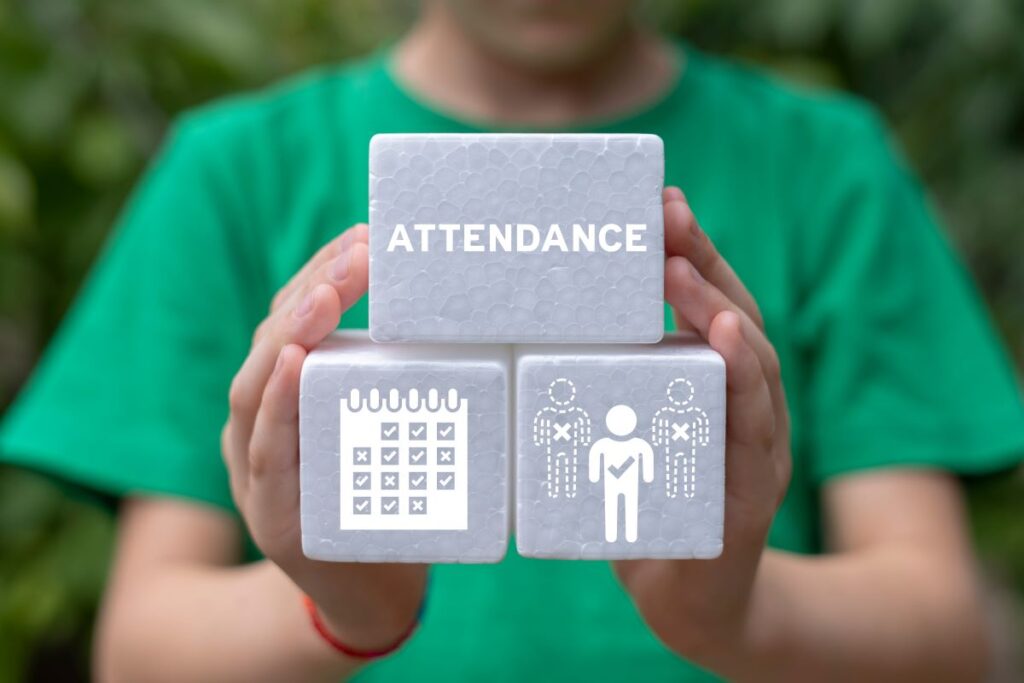
I did not have a term for it then, but what I was witnessing was the early stages of what has been identified as “school avoidance,” and what once was a relatively rare occurrence has now grown into an epidemic of sizable importance, exacerbated by the long-lasting and lingering effects of the COVID-19 pandemic.
What is School Avoidance?
School avoidance is as simple as it sounds. It is the idea, practice, and occurrence of avoiding school. Some researchers have labeled it school refusal and classified it as a phobia for students. Today’s students aren’t simply holding up a thermometer to the nearest lamp to try and get it to run hot (maybe that was just me), rather they produce quite complex and imaginative ways to get out of going to school.
School avoidance today can take many shapes, often consisting of students missing large amounts of school, and complaining of not feeling well, often with vague or unexplainable symptoms. These symptoms can manifest into issues that are hard to diagnose or physically see, like anxiety-related symptoms. Furthermore, school avoidance can also include not remaining in school the entire day.
In my experience as an administrator, I have seen school avoidance start small, and then quickly progress into an uncontrollable problem and pattern of behavior. School avoidance behavior includes being completely absent from school, being present at school but spending large amounts of time in different spaces (nurse, guidance, or another office space), or visible and audible outbursts of expressing anger and frustration about having to be at school.
The Underlying Causes
Having worked with school-aged children from five to eighteen and beyond, I can safely say that all students are unique, and no school day is exactly like the other. Students today present a myriad of challenges and problems, based on several factors, including social and emotional obstacles, socioeconomic struggles, and others. However, these challenges are often genuine, present, and easily recognizable and understood.

Looking for a graduate program?
The issue with school avoidance and the underlying causes is that they are hard to diagnose, address, and appropriately handle. Educators can usually start with some commonalities when addressing school avoidance, which is most normally caused by social anxiety, teasing or bullying from other students, fear for safety, actual physical harm, or a fear of failure, which is one that I have witnessed personally manifest itself in the high school setting.
Other underlying causes can include specific disorders such as panic disorder, separation anxiety, post-traumatic stress disorder, or obsessive-compulsive disorder. Other causes can be linked back to academic struggles, such as processing disorders, dyslexia, ADHD, prolonged absences due to injury or illness, a major transition or move in life, or a traumatic life event.
The Impact on Children
Students need to be in school, in some capacity. The school setting serves as a valuable resource for social, academic, and emotional growth. However, as noted prior, there are several issues affecting students that cause them to not like school and avoid attending regularly. The absence of school in a student’s life can have devastating and profound impacts on their neurological, social, physical, and emotional growth.
The COVID-19 pandemic further reinforced this when millions of students went home from school one day, and returned after a year, with some of them never returning. This affected students in several ways. Students in the formative years of elementary to middle school missed vital social interaction and norms that were key to their cognitive development.
Younger students missed critical play and social development elements that were key to developing positive and healthy relationships. School avoidance has grown since the COVID-19 pandemic, because students were sent home for such a long period. This was the proverbial straw for those teetering on the edge of not enjoying school anyway. School avoidance can negatively impact students and their parents/guardians, because compulsory attendance is mandatory in many states, at least until students are seventeen.
Failure to attend school can have legal implications for both students and parents, often resulting in fines and even jail time. Additionally, not having a school routine for students can lead to negative long-term effects on students, like dropping out of school. Failure to graduate from high school has significant impacts on young people regarding post-secondary plans, like college, the workforce, or the military.
Ultimately, school avoidance is a very real and present issue, but often with very vague or unknown causes. The best strategy to counteract school avoidance is expert communication between parents and school officials. Understanding the struggles the student is facing, and identifying actionable outcomes for student success is key.
Understanding that school avoidance or refusal is not a clinical diagnosis, but rather a symptom of something larger or an underlying issue is paramount in meeting the challenge head-on. Just as each student is individual and unique, each school avoidance case is different. As an educator, I hope that we provide safe and accommodating learning environments where all students can thrive and be the best versions of themselves and that school is an important part of their journey as they seek to make their mark on our world.
Educators never stop learning; check out our available graduate degree programs to hone your skills and promote lifelong learning and academic excellence.