
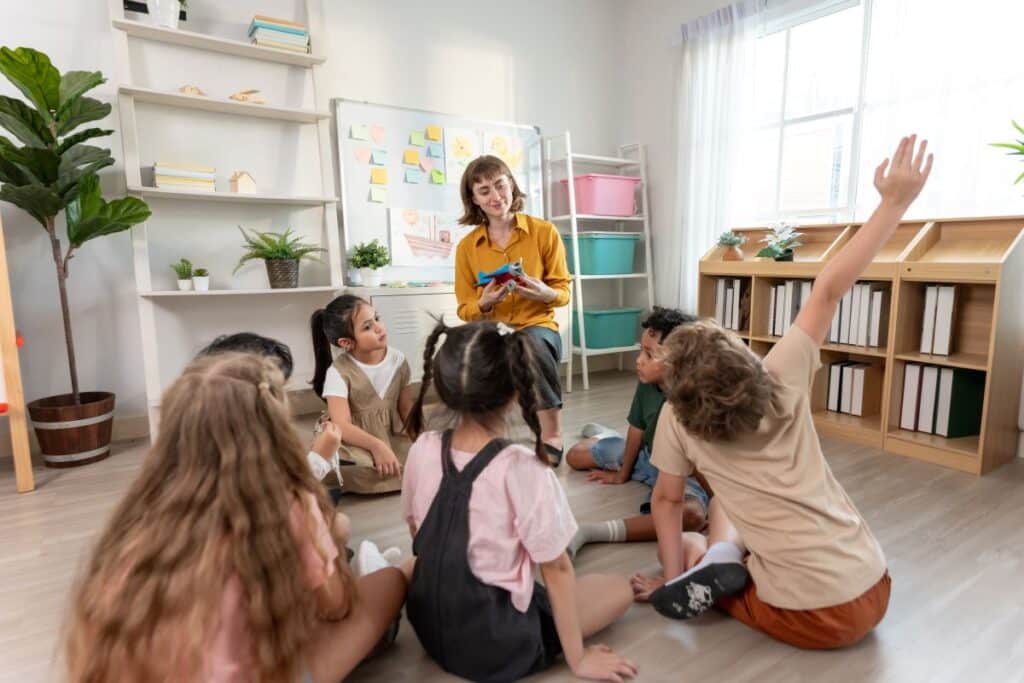
The classroom environment plays a crucial role in shaping a child’s educational experience. It serves as the backdrop for learning, social interaction, and personal growth.
An effective preschool classroom is one that offers a balance of structure and freedom, enabling children to explore and learn at their own pace.
Encouraging Exploration and Curiosity
A preschool classroom should be a place where curiosity is encouraged, and exploration is a part of everyday activities.
Educators should incorporate a variety of materials and resources that cater to different learning styles can enhance a child’s ability to discover and learn.
These could include books, puzzles, art supplies, and science kits, among others.
Supporting Social Interaction
Social development is a critical aspect of early childhood education. An engaging classroom environment should facilitate social interaction among children.
This can be achieved by arranging furniture and play areas in a way that encourages group activities and collaborative play.
Designing an Engaging Physical Space
The design of the physical space in a preschool classroom significantly impacts how children engage with their surroundings. Here are some strategies to consider:
Color and Decor
Colors can influence mood and behavior. Bright, cheerful colors like yellow and green can stimulate creativity and enthusiasm, while softer tones can create a calming atmosphere.
Decorate the classroom with educational and inspirational posters that reinforce learning themes.
Flexible Layout
Create a flexible layout that can be easily reconfigured to accommodate different activities.
Movable furniture and open spaces allow for a variety of setups, from circle time to individual learning stations.
Ensure that the classroom has distinct areas for different activities such as reading, art, and quiet time.
Accessibility and Safety
Ensure that all materials and resources are easily accessible to children, promoting independence and self-directed learning.
Safety is paramount; all furniture and equipment should be child-friendly and regularly checked for hazards.
Incorporating Teaching Strategies
An engaging classroom environment goes hand in hand with effective teaching strategies. Here are some approaches to consider:
Play-Based Learning
Play is a powerful vehicle for learning in early childhood. Incorporate play-based learning strategies that allow children to explore concepts through hands-on activities. This could include role-playing, building blocks, or interactive storytelling.

Looking for a graduate program?
Thematic Learning
Organize the curriculum around themes that capture children’s interest and relate to the world around them.
Themes like “Under the Sea” or “Space Adventure” can integrate multiple subjects such as science, art, and language into a cohesive learning experience.
Differentiated Instruction
Recognize that each child is unique and may require different approaches to learning.
Differentiated instruction involves tailoring teaching methods to meet the diverse needs of students, ensuring that each child can thrive in the classroom.
Fostering Emotional and Social Development
A nurturing classroom environment also supports children’s emotional and social development. Here are some strategies to consider:
Building Emotional Intelligence
Help children understand and express their emotions by incorporating activities that promote emotional intelligence.
This could include story time with books about feelings, role-playing scenarios, and guided discussions about emotions.
Encouraging Empathy and Cooperation
Teach children the value of empathy and cooperation through group activities and collaborative projects.
Encourage them to share, take turns, and support one another in their learning journeys.
Creating a Sense of Belonging
Develop a classroom culture where every child feels valued and included. Celebrate diversity and foster a sense of community through activities that highlight individual strengths and contributions.
Engaging Families in the Learning Process
Family involvement is a key component of a successful preschool experience. Here are some ways to engage families in the classroom:
Regular Communication
Keep families informed about classroom activities and their child’s progress through regular newsletters, emails, or parent-teacher meetings.
Open communication builds trust and encourages parental involvement.
Family Involvement Activities
Invite families to participate in classroom activities or special events. This could include reading to the class, assisting with art projects, or sharing cultural traditions.
Providing Resources for Home Learning
Offer families resources and suggestions for extending learning at home. This could include book lists, educational games, or simple science experiments that families can do together.
Creating an engaging preschool classroom environment involves a thoughtful combination of physical space design, teaching strategies, and emotional support.
By fostering a space where children feel safe, inspired, and valued, educators can set the stage for a lifelong love of learning.
A well-designed preschool classroom not only supports child development but also empowers educators to implement effective teaching strategies.
By considering the needs of each child and involving families in the educational process, teachers can create a dynamic and nurturing environment that promotes growth and discovery.
Ready to impact students through early childhood education? Explore our available ECE programs and start your journey today!