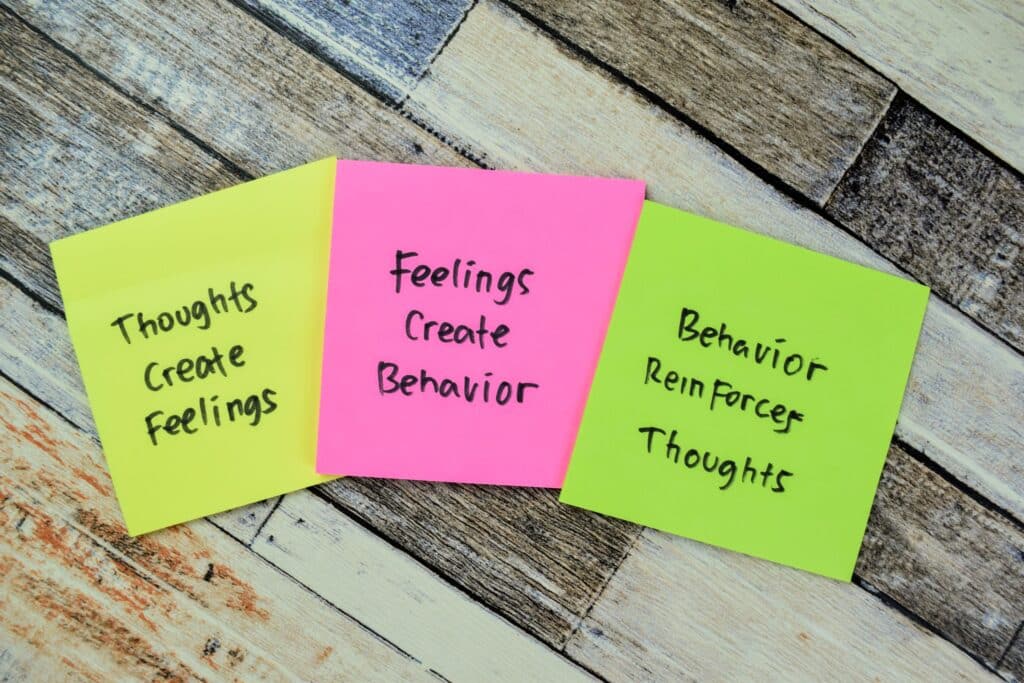
An educator’s primary goal is to instruct and fill students with knowledge from birth to adulthood. While teachers are educating children, they are also teaching children and young people to become independent learners and problem solvers. Solving problems for some students is challenging when it should be intuitive. Many students participate in cognitive behavioral therapy, CBT, to learn strategies and build a personal toolbox of techniques to best solve problems and react appropriately in situations that generate negative thoughts.
What is Cognitive Behavioral Therapy?
Students referred to cognitive behavioral therapy, is typically due to the student’s feelings and expressing negative thoughts that impede both learning growth and possibly social development with peers. The therapy’s objective is to create a student’s awareness of how their negative thought patterns ultimately affect their behaviors in a classroom and in social settings. A cognitive behavioral therapist shines light on how thinking negatively can produce negative outcomes, both in how the student feels about themselves and in the choices made, which sometimes require consequences for poor behavior.
Can Students Benefit from Cognitive Behavioral Therapy in Schools?
Once students learn how to reframe their daily thoughts in a positive direction, they will feel more positive about all aspects of life. When students feel more positive, they are not bogged down with negative emotions that can impact the ability to learn new material, take risks in learning, problem-solving, and new social situations. Students who spend adequate time in cognitive behavioral therapy will learn various techniques to shift negative thoughts to positive feelings.
Cognitive Behavioral Therapy Strategies
Cognitive Restructuring or Reframing
This process involves taking a direct look at the negative feelings experienced by a student. Once the troubled feelings have been identified the therapist will ask the student to practice reframing the negative thought into a positive thought. An example may be: “I am terrible at math. I never get an A on a math test.” This negative thought could be reframed into, “Math is a challenge for me, but I improved my math test score by two points this week.” When reframing a negative thought, the student is practicing finding a positive feeling to focus on instead of dwelling on a negative feeling that disrupts the student’s ability to move forward with learning. The positive reframe must be realistic, believable, and achievable.
Guided Discovery
A student is asked by the therapist why they feel the negative thoughts and encourages the student to provide support for the negative feelings while guiding the student toward a broader perspective to eventually lead the student to realize there is no evidence to support the negative thought/feeling. This strategy intends to expose a student to different points of view on a subject. Once a student discovers a different point of view to challenge their feelings, they now have other reasons to consider if their feelings are necessary and can possibly change from negative to positive.

Looking for a graduate program?
Journaling and Thought Records
A therapist might ask a student to record daily thoughts and notice over time the decrease in daily negative thoughts once implementing strategies learned through therapy. Recording thoughts can also be helpful for a student as a reminder of the many negative thoughts felt throughout the day, or reminded of a particular negative thought that creeps up each day and needs more work. The exercise of journaling daily emotions and thoughts then reading the journal entry aloud, can bring an awareness to an individual.
The reality when reading aloud the words journaled, creates a realization of how one sounds when speaking. This exercise can be eye opening for a student that vocalizes negative thoughts and does not realize the negativity’s impact on others around this student. Hearing so many negative statements one after another in writing, will hopefully challenge the individual to change the negative into positive thoughts.
There are other strategies available for therapists to use in cognitive behavioral therapy. When an educator has a student experiencing regular negative thoughts that affect classroom behavior and their well-being, they can use the same strategies as the therapists and a few others that are easy to implement in the classroom.
Mindfulness Time
Mindfulness is an act of being fully present, aware of where we are, and what we are doing without being overly reactive or overwhelmed. In one word, breathe. The teacher encourages the student to walk away from the assignment, activity, or interaction that could turn into frustration or negative feelings. A teacher can have a “Cozy Corner” in an elementary classroom where a child can be directed to go when feeling the need to take a break or just breathe for a minute. Mindfulness can be more advanced for older students with meditation for 15 to 20 minutes in a different classroom, walk the hallways, or take a quick lap around the track.
Classroom Environment
A teacher can use affirming quotes printed on posters to decorate the classroom, offering students an opportunity to read positive words that may help diminish any negative thoughts. Teachers can create affirmation cards to distribute to students when needed to turn a negative situation around or praise a student for exhibiting grit, gratitude, or docility. The affirmation cards can also be helpful when students need support when solving challenging personal problems. A teacher’s classroom management techniques can also involve positive talk instead of directing attention to negative behaviors. Students usually respond better when teachers choose positive reinforcement that builds the classroom up as a community and includes individual accolades.
Modeling
A teacher must model positivity, thoughtful problem-solving solutions after mistakes are made, and the ability to face personal challenges with positive thoughts. Cognitive behavioral strategies can support students that tend to see themselves through a negative lens by turning it into a positive outcome. Once students are comfortable with CBT strategies their behavior can change, they begin to feel confident, allowing them to achieve academic and social success.
Educators never stop learning; check out our available graduate degree programs to hone your skills and promote lifelong learning and academic excellence.