On a personal note, this educator nerd with a technology application certification loves the topic of artificial intelligence (AI). I immediately think of Stanley Kubricks 2001: A Space Odyssey and the computer’s response: “I can’t do that Dave.”
I also remember watching a documentary discussing the top ten reasons for the end of humanity, and robots taking over the world made the top ten list because robots/computers started to think for themselves. It was somewhere behind the sun exploding and being hit by an asteroid.
It is a stretch to say these exact scenarios will happen, but in general, so many possibilities can arise from artificial intelligence and artificial intelligence in education; even computers think so if you ask them!
What is Artificial Intelligence in Education?
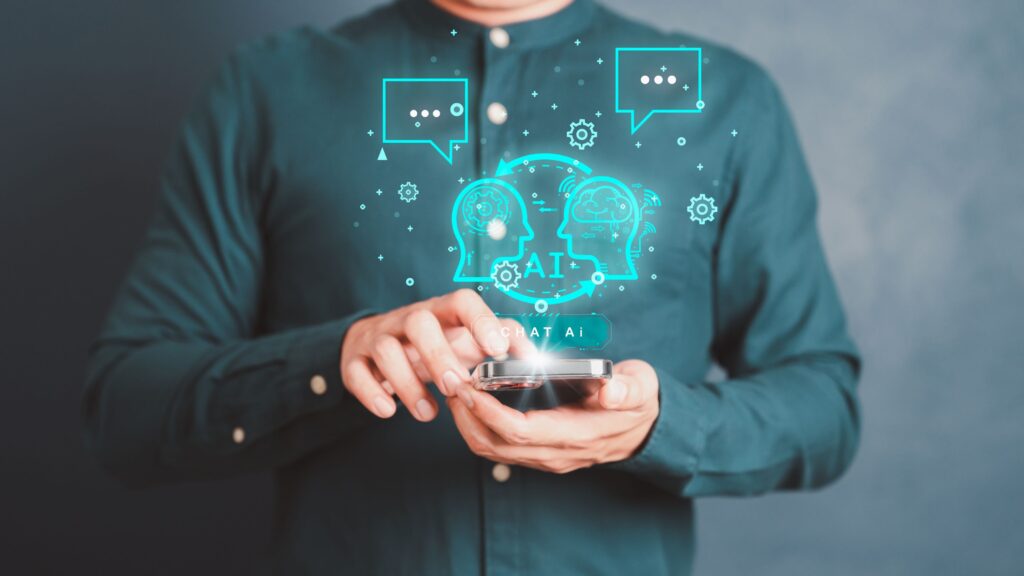
Tech Target’s artificial intelligence definition defines AI as the simulation of human intelligence processes by machines, especially computer systems.
Currently many schools in Texas and other parts of the country, use diagnostic testing tools such as MAP from NWEA that find the level that students can perform at by asking questions and basing the next question on whether or not the student can move to a higher level of question. This form of artificial intelligence can tell us what level the student should be at and what they are ready for next. This sounds a lot like a good teacher who measures where their students are to find out what they are ready to learn.
Benefits of AI in Education
So, the first answer to the question of what the benefits of artificial intelligence in education are that these diagnostic tools can save teachers time in the classroom. MAP and other artificial intelligence diagnostic tools can keep the teacher from needing to create that pre-test and do their own diagnostic. Instead, these programs can quickly tell teachers where a student is in the learning continuum, what they need to move forward, and how to group students in their class to help them move forward.
Teachers talk continually (and rightfully so) about the need to make their job easier. This is one example of how to make teachers’ lives easier.
Another way AI can be used in education is in grading. Another program my school has become familiar with in our Math Department is ALEKS. Most of our math teachers will assign homework based on where they are in the unit and what each student may need concerning that unit. ALEKS helps teachers to customize the work to the student’s needs. This helps to remove the cookie-cutter approach to each student, but rather helps to individualize student work based on their needs and performance. Sounds like another attribute of a great teacher.

Looking for a graduate program?
ALEKS can grade the work for our homework for our teachers based on how the teachers want the work graded; a pretty solid teaching assistant to me and another time saver for our teachers.
There are other programs that can do similar tasks. Google Classroom has a grading component that might not be as customizable, but it can still save time for teachers in the process.
One last benefit of AI that is worth mentioning is that AI can take some bias out of education.
Whatever that bias might be, this performance-based approach can take away the human element (that is not necessarily bad) that at times can give us preconceived notions about a student’s ability. The AI can isolate student performance and focus on simply just that.
Challenges to AI in Education
Since artificial intelligence is still in the early stages of implementation and development, there are natural challenges to artificial intelligence that come along with it.
In the research for this article, I saw many examples of where AI can grade essays. Some pluses of this were the ability to check grammar and spelling and some basic writing necessities. Some other sides to the argument mentioned that writing at times can be so subjective that it takes a human to be able to infer the author’s purpose and other subtleties.
I have a very successful English teacher who works herself to the bone to make sure she is the one who reads every essay her students write because she has seen them write the entire year and she knows where they have improved and what they are working on. It would be difficult for a computer to be able to do that. Thus, something as subjective as writing might be difficult to turn over all the way to artificial intelligence.
Another point I believe this teacher has, but she did not say, is that part of her reading each essay is the relationship she is building with each student. Her investment in each student is partially based on her conversations and personality with each student. It will be difficult for AI to have a strong personal relationship with students, and I would consider this to be the largest challenge for AI. We learned from the COVID-19 pandemic that there is no match for the in-person teacher.
A great teacher may use AI tools to know the students’ needs and performance level, but thus far, AI has not been able to sit down with a student, have a conversation, and find out the reason the student has despised math their whole life, or what happened one morning three years ago when something happened that at home and the student had to take an English test that day and now the student associates English tests with a bad memory at home.
The tools and time savers that artificial intelligence can bring to the classroom are only getting started. The grading, the performance data, etc. are all good and teachers need ways to save time in as many ways as possible. But where will it go next? Think of the language learning possibilities of AI for anyone learning a new language. Think of how early target instruction could occur based on student performance. Think of ChatGPT (and other AI chatbots) helping teachers map out lesson plans. The greatest teacher assistant ever may be one getting started.
Teachers never stop learning; check out our available graduate degree programs to hone your skills and promote lifelong learning and academic excellence.