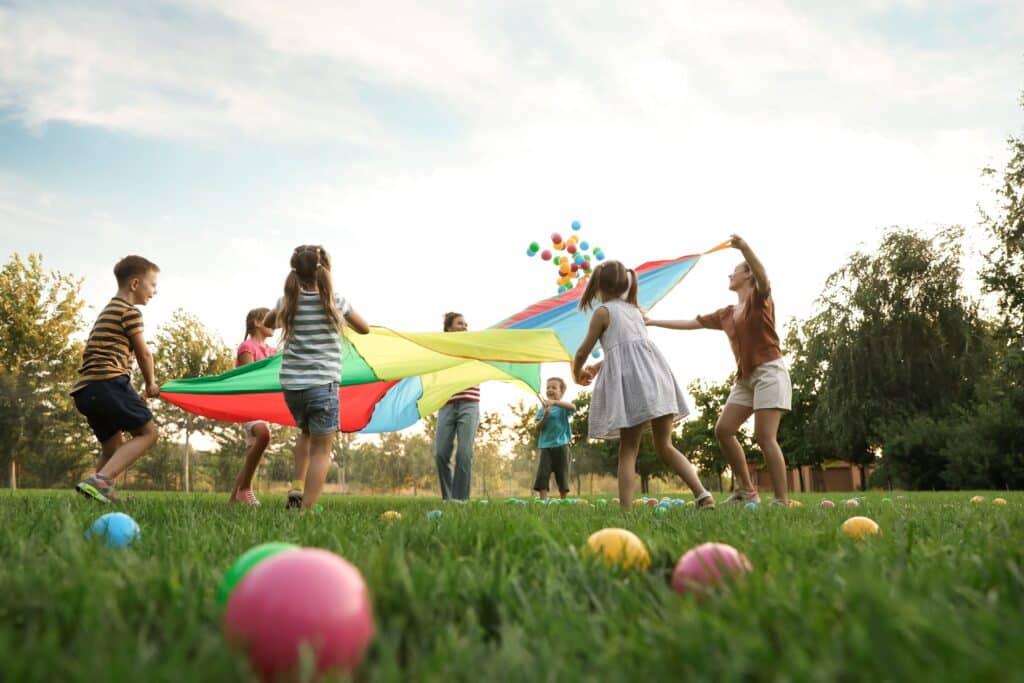
Using play-based learning in classrooms is a helpful way for students to build important skills. It allows them to take part in activities that spark their curiosity and creativity.
This educational method, widely recognized for its benefits in early childhood education, is increasingly being adopted in various educational settings.
By integrating play into the learning process, educators can foster an environment where students learn through exploration and discovery.
Understanding Play-Based Learning
Play-based learning is an educational approach that uses play as the primary method for teaching and learning.
This method encourages students to explore, experiment, and engage with their environment, allowing them to learn naturally and at their own pace.
Unlike traditional instruction methods that focus on rote memorization and direct instruction, play-based learning prioritizes hands-on experiences and student-led exploration.
The Benefits of Play-Based Learning
Play-based learning offers numerous benefits that extend beyond academic achievement. Here are some key advantages:
- Promotes Social and Emotional Development: Through play, students learn to interact with others, develop empathy, and manage emotions. They build relationships and learn to communicate effectively with peers and adults.
- Enhances Cognitive Skills: Engaging in play helps develop critical thinking, problem-solving, and decision-making skills. Students learn to analyze situations, make predictions, and draw conclusions based on their experiences.
- Fosters Creativity and Imagination: Play provides opportunities for students to express themselves creatively. They can explore different roles, scenarios, and ideas, which enhances their imaginative abilities.
- Improves Physical Development: Physical play activities enhance motor skills, coordination, and overall physical health. Activities like running, climbing, and building help develop strength and agility.
- Encourages Independence and Confidence: Through play, students learn to take initiative and make choices, fostering a sense of independence. This empowers them and builds self-confidence.
Implementing Play-Based Learning in the Classroom
Implementing play-based learning requires thoughtful planning and a shift in teaching strategies. Here are some steps educators can take to successfully integrate play into their classrooms:
Design a Play-Friendly Environment
Creating a classroom environment that encourages play is crucial.
Set up the classroom with different areas for specific activities. Make a space for art, one for building, a corner for reading, and an area for dramatic play.
Ensure that these spaces are equipped with materials and resources that stimulate exploration and creativity.
Incorporate Hands-On Learning Activities
Hands-on learning activities are a cornerstone of play-based learning. Incorporate activities that encourage students to explore and experiment.
For instance, science experiments, art projects, and building challenges allow students to engage in active learning and apply concepts in real-world scenarios.
Encourage Student-Led Exploration
Allow students the freedom to explore topics of interest at their own pace. Provide guidance and support, but let students take the lead in their learning journey. This autonomy promotes intrinsic motivation and a love for learning.
Use Play to Reinforce Academic Concepts
Integrate play into academic subjects to reinforce concepts and skills.

Looking for a graduate program?
For example, use math games to teach counting and problem-solving, or storytelling and role-play to enhance language skills.
This approach makes learning more engaging and memorable.
Foster Collaboration and Communication
Encourage collaborative play activities that require students to work together, share ideas, and solve problems as a team.
Group projects and cooperative games help students develop interpersonal skills and learn the value of teamwork.
Challenges and Considerations
While play-based learning offers numerous benefits, there are challenges to consider:
Balancing Play and Academics
One of the main challenges is finding the right balance between play and academic instruction. It’s important to ensure that play activities align with educational goals and curriculum standards while allowing for spontaneity and creativity.
Managing Classroom Dynamics
Managing a play-based classroom requires flexibility and adaptability. Teachers must be prepared to address diverse learning styles and needs, ensuring that all students are engaged and supported.
Assessing Learning Outcomes
Assessing student progress in a play-based learning environment can be challenging.
Traditional assessments may not capture the full extent of learning that occurs through play. Consider using observational assessments, portfolios, and student reflections to evaluate learning outcomes.
Real-World Examples of Play-Based Learning
Several schools and educational programs have successfully implemented play-based learning with positive results. For instance, the Reggio Emilia approach, which originated in Italy, emphasizes child-led exploration and play as a means of learning.
This approach has been adopted by schools worldwide and is known for its focus on creativity and collaborative learning.
Similarly, the Montessori method incorporates play and hands-on learning as central components of its educational philosophy.
Montessori classrooms are designed to encourage self-directed learning and exploration, allowing students to engage with materials and activities at their own pace.
Implementing play-based learning in classrooms offers students a dynamic and engaging educational experience that promotes holistic development.
By integrating play into the learning process, educators can create an environment where students thrive academically, socially, and emotionally.
While challenges exist, the benefits of play-based learning make it a worthwhile approach for fostering lifelong learners. By embracing this method, educators can inspire curiosity, creativity, and a love for learning in their students.
Educators never stop learning; check out our available graduate degree programs to hone your skills and promote lifelong learning and academic excellence.